About Jose Rizal Family Surnames
Had their forefathers not adopted other names, Jose and Paciano could have been known as "Lamco" (and not Rizal) brothers.
Their paternal great-great grandfather, Chinese merchant Domingo Lamco, adopted the name "Mercado," which means "market." But Jose's father, Francisco, who eventually became primarily a farmer, adopted the surname "Rizal" (originally "Ricial", which means "the green of young growth" or "green fields"). The name was suggested by a provincial governor who was a friend of the family. The new name, however, caused confusion in the commercial affairs of the family. Don Francisco thus settled on the name "Rizal Mercado" as a compromise, and often just used his more known surname "Mercado."
When Paciano was a student at the College of San Jose, he used "Mercado" as his last name. But because he had gained notoriety with his links to Father Burgos of the "Gomburza," he suggested that Jose use the surname "Rizal" for Jose's own safety.
Commenting on using the name "Rizal" at Ateneo, Jose once wrote: "My family never paid much attention [to our second surname Rizal], but now I had to use it. thus giving me the appearance of an illegitimate child!" (as cited in Arriza, 2012, para. 8)
But this very name suggested by Paciano to be used by his brother had become so well known by 1891, the year Jose finished his El Filibusterismo. As Jose wrote to a friend, "All my family now carry the name Rizal instead of Mercado because the name Rizal means persecution! Good! I too want to join them and be worthy of this family name..." (as cited in Arriza, 2012, para. 8).
Francisco Mercado
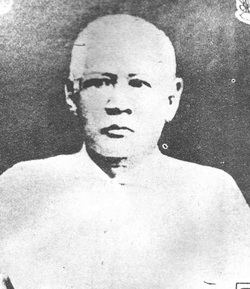
Jose's father, Francisco Engracio Rizal Mercado, was a productive farmer from Biñan, Laguna. He was an independent-minded, taciturn, but dynamic gentleman from whom Jose inherited his "free soul." Don Francisco became tiniente gobernadorcillo (lieutenant governor) in Calamba and was thus nicknamed Tiniente Kiko. (Some students' comical conjecture that the fictional character Kikong Matsing of Batibot was named after Don Francisco is, of course, unfounded.)
Francisco's great grandfather was Domingo Lam-co, a learned pro-poor or maka-masa Chinese immigrant businessman who married a sophisticated Chinese mestiza of Manila named Ines de la Rosa. One of their two children, Francisco (also), resided in Biñan and married Bernarda Monicha. Francisco and Bernarda's son. Juan Mercado, became the gobernadorcillo (town mayor) of Biñan, Laguna. He married Cirila Alejandra, and they had 12 children, the youngest being Jose Rizal's father, Francisco.
Don Francisco was born on May 11, 1818 in Biñan, Laguna. When he was eight years old, he lost his father. He was nonetheless educated as he took Latin and Philosophy at the College of San Jose in Manila, where he met and fell in love with Teodora Alonso, a student in the College of Santa Rosa. Married on June 28, 1848, they settled down in Calamba where they were granted lease of a rice farm in the Dominican-owned haciendas.
Teodora Alonzo
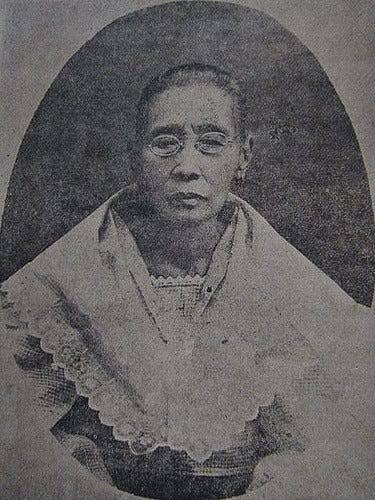
Jose's mother, Teodora Alonzo (also spelled "Alonso"), was an educated and highly cultured woman from Sta. Cruz, Manila. Common biographies state that Doña Teodora Alonso Quintos Realonda, also known as "Lolay." was born on November 8, 1826 in Santa Cruz, Manila and baptized at the Santa Cruz Church. Strangely however, the volume in the church books that supposedly contained Teodora's baptismal records was the only one missing from the otherwise complete records down to the eighteenth century (Ocampo, 2012, p. 39). Asuncion Rizal-Lopez Bantug, the granddaughter of Jose's sister Narcisa, contrarily claims that Lola Lolay and all her siblings were born in Calamba, but (just) lived in Manila (Bantug & Ventura, 1997, p. 18).
Doña Lolay was educated at the College of Santa Rosa, an esteemed school for girls in Manila. She was usually described as a diligent business-minded woman, very graceful but courageous, well-mannered, religious, and well-read. Very dignified, she disliked gossip and vulgar conversation. Possessing refined culture and literary talents, she influenced her children to love the arts, literature, and music. Herself an educated woman, Lolay sent her children to colleges in Manila. To help in the economy of the family, she ran sugar and flour mills and a small store in their house, selling home-made ham, sausages, jams, jellies, and many others. (Looking back, her business, in a way, predated the meat-processing commerce of the Pampangueños today and the ube jam production of some nuns in Baguio.)
It is believed that Doña Teodora's family descended from Lakandula, the last native king of Tondo. (For young Filipino generations. Lakandula has to be distinguished from the unofficial Hari ng Tondo, Asiong Salonga, the Manila kingpin who was immortalized in the movie incidentally by Laguna's own governor E. R. Ejercito.)
Lolay's great-grandfather was Eugenio Ursua (of Japanese descent) who married a Filipina named Benigna. Regina, their daughter, married a Filipino- Chinese lawyer of Pangasinan, Manuel de Quintos. Lorenzo Alberto Alonso, a well- off Spanish-Filipino mestizo of Biñan, took as his "significant other" Brigida Quintos, daughter of Manuel and Regina Quintos. The Lorenzo-Brigida union produced five children, the second of them was Jose Rizal's mother, Teodora Alonso Quintos.
Through the Claveria decree of 1849 which changed the Filipino native surnames, the Alonsos adopted the surname Realonda. Rizal's mother thus became Teodora Alonso Quintos Realonda.
Saturnina Rizal
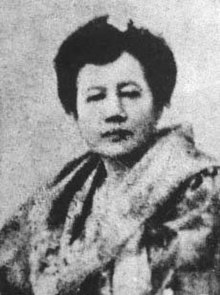
Saturnina Rizal (1850-1913) is the eldest child of Don Francisco and Teodora Alonso. She and her mother provided the little Jose with good basic education that by the age of three, Pepe (Jose's nickname) already knew his alphabet.
Paciano Rizal
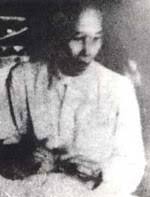
Paciano Rizal, Jose's only brother, was born on March 7, 1851 in Calamba, Laguna. He was fondly addressed by his siblings as Nor Paciano, short for "Señor Paciano" The 10-year older brother of Jose studied at San Jose College in Manila, became a farmer, and later a general of the Philippine Revolution. (A detailed discussion on Paciano's life and his influence on Jose is available in Appendix E: "Paciano Rizal: Pinoy Hero's Big Brother.")
After Jose's execution in December 1896, Paciano joined the Katipuneros in Cavite under General Emilio Aguinaldo. As Katipunero, Paciano was commissioned as general of the revolutionary forces and elected as secretary of finance in the Department Government of Central Luzon.
Narcisa Rizal
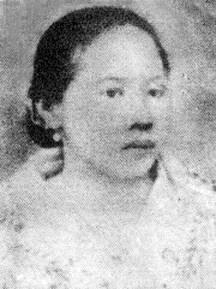
Narcisa Rizal (1852-1939) or simply "Sisa" was the third child in the family. Later in history, Narcisa (like Saturnina) would help in financing Rizal's studies in Europe, even pawning her jewelry and peddling her clothes if needed. It was said she could recite from memory almost all of the poems of our national hero.
Olympia Rizal
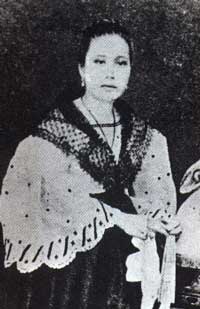
Olympia Rizal (1855-1887) was the fourth child in the Rizal family. Jose loved to tease her, sometimes good-humoredly describing her as his stout sister. Jose's first love, Segunda Katigbak, was Olympia's schoolmate at the La Concordia College. Rizal confided to Olympia (also spelled "Olimpia") about Segunda, and the sister willingly served as the mediator between the two teenage lovers.
Lucia Rizal
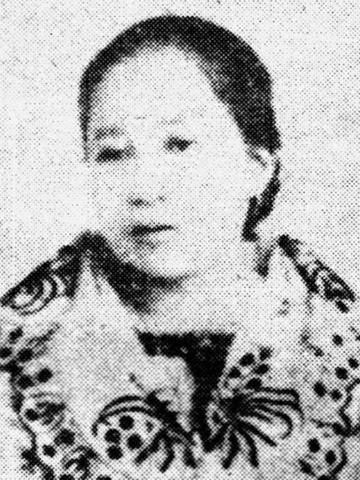
Lucia Rizal (1857-1919) was the fifth child in the family. She married Mariano Herbosa of Calamba, Laguna. Charged of inciting the Calamba townsfolk not to pay land rent and causing unrest, the couple was once ordered to be deported along with some Rizal family members. (Lucia's husband died during the cholera epidemic in May 1889 and was refused a Catholic burial for not going to confession since his marriage to Lucia. In Jose's article in La Solidaridad titled Una profanacion (A Profanation), he scornfully attacked the friars for declining to bury in "sacred ground" a "good Christian" simply because he was the "brother-in-law of Rizal.")
Maria Rizal
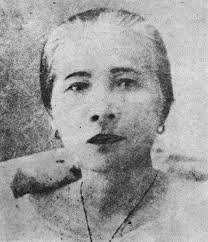
Maria Rizal (1859-1945) was the sixth child in the family. It was to her whom Jose talked about wanting to marry Josephine Bracken when the majority of the Rizal family was apparently not amenable to the idea. In his letter dated December 12, 1891, Jose had also brought up to Maria his plan of establishing a Filipino colony in North British Borneo. In his letter dated December 28, 1891, Jose wrote to Maria, "I'm told that your children are very pretty." Today, we have a historical proof that Maria's progenies were indeed nice-looking (lahing maganda).
Maria and Daniel had five children: Mauricio, Petrona, Prudencio, Paz, and Encarnacion. Their son Mauricio married Conception Arguelles and the couple had a son named Ismael Arguelles Cruz. Ismael was the father of Gemma Cruz Araneta, the first Filipina to win the Miss International title, also the first Southeast Asian to win an international beauty-pageant title.
Concepcion Rizal
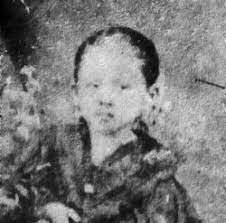
Also called "Concha" by her siblings, Concepcion Rizal (1862-1865) was the eighth child of the Rizal family. She died at the age of three. Of his sisters, it was said that the young Pepe loved most little Concha who was a year younger than he. Jose played games and shared children stories with her, and from her he felt the beauty of sisterly love at a young age
Josefa Rizal
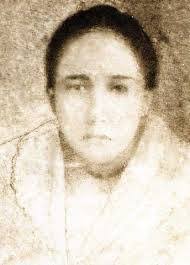
Josefa Rizal's nickname is "Panggoy" (1865-1945). She was the ninth child in the family. Panggoy died a spinster. Among Jose's letters to Josefa, the one dated October 26, 1893 was perhaps the most fascinating. Written in English, the letter addressed Josefa as "Miss Josephine Rizal." (After Jose's martyrdom, the epileptic Josefa joined the Katipunan and was even supposed to have been elected the president of its women section. She was one of the original 29 women admitted to the Katipunan along with Gregoria de Jesus, wife of Andres Bonifacio. They safeguarded the secret papers and documents of the society and danced and sang during sessions so that civil guards would think that the meetings were just harmless social gatherings.)
Trinidad Rizal
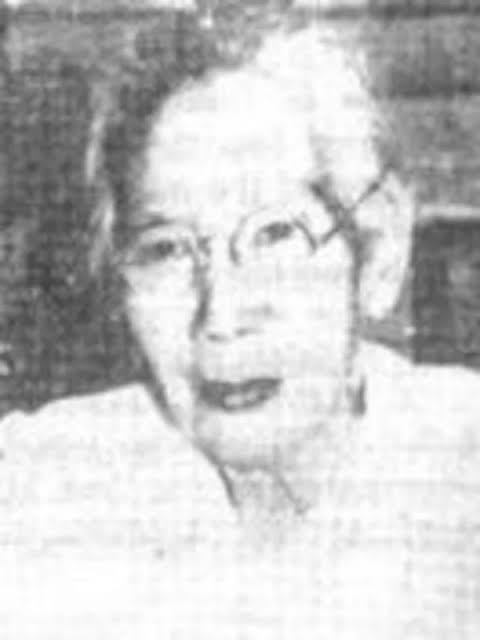
Trinidad Rizal (1868-1951) or "Trining" was the tenth child. Historically, she became the custodian of Rizal's last and greatest poem. Right before Jose's execution, Trinidad and their mother visited him in the Fort Santiago prison cell. As they were leaving. Jose handed over to Trining an alcohol cooking stove, a gift from the Pardo de Taveras, whispering to her in a language, which the guards could not understand, "There is something in it." That "something" was Rizal's elegy now known as "Mi Ultimo Adios." Like Josefa, Paciano, and two nieces, Trinidad joined the Katipunan after Jose's death.
Soledad Rizal
Also called "Choleng," Soledad Rizal (1870-1929) was the youngest child of the Rizal family. Being a teacher, she was arguably the best-educated among Rizal's sisters. In his long and meaty letter to Choleng dated June 6, 1890 ("Jose Rizal on Facebook Courtship," 2013), Jose told her sister that he was proud of her for becoming a teacher. He thus counseled her to be a model of virtues and good qualities "for the one who should teach should be better than the persons who need her learning." Rizal nonetheless used the topic as leverage in somewhat rebuking her sister for getting married to Pantaleon Quintero of Calamba without their parents' consent. "Because of you," he wrote, "the peace of our family has been disturbed."
Choleng's union with Pantaleon, nonetheless, resulted in the Rizal family's becoming connected by affinity to Miguel Malvar (the hero who could have been listed as the second Philippine President for taking over the revolutionary government after Emilio Aguinaldo's arrest in 1901). Soledad and Pantaleon had five children: Trinitario, Amelia, Luisa, Serafin, and Felix. Their daughter Amelia married Bernabe Malvar, son of Gen. Miguel Malvar.